Building a home gym used to be expensive, with bulky, low-quality equipment dominating the budget market. Today, you can build a strong, reliable setup without spending commercial gym money, even in a small space.
Most people only need a few essentials: adjustable dumbbells, a bench, a rack, a barbell with plates, and one cardio machine. This guide highlights the best budget options that are actually worth buying.
Contents
- 1 Why Build a Home Gym At All?
- 2 Best Budget Squat Rack
- 3 Best Budget Adjustable Weight Bench
- 4 Best Budget Adjustable Dumbbells
- 5 Best Budget Weight Plates
- 6 Best Budget Treadmills
- 7 Best Budget Elliptical
- 8 Best Budget Flat Bench
- 9 Best Budget Kettlebells
- 10 Best Budget Fixed Dumbbells
- 11 Best Budget Cardio Equipment
- 12 Best Budget Exercise Bike
- 13 Best Budget Barbell
- 14 How We Chose the Equipment
- 15 Sample Home Gym Setups By Budget
- 16 Apartment vs. Garage Gyms
- 17 Frequently Asked Questions
- 18 Final Thoughts
Why Build a Home Gym At All?
The obvious answer is time. No commute, no waiting for the squat rack, no arguing over who left a dumbbell on the floor. You train when you want, for as long as you want.
The financial case is less obvious but real. A home gym feels expensive upfront. Over five or ten years of gym memberships, it almost always wins, especially if you buy gradually rather than all at once.
That “buy gradually” part matters more than people realize. The smartest home gyms start with a few essentials and expand based on what actually gets used. Buying everything at once is how you end up with a folding bike collecting dust under a treadmill you haven’t touched in eight months.
Best Budget Squat Rack
For serious strength training, a rack is eventually unavoidable. It lets you squat safely without a spotter, bench press without someone standing over you, and do pull-ups when the mood strikes. Once you have one, it tends to become the center of everything else.
Mikolo Power Cage

The Mikolo packs a lot into one frame: an integrated pulley system, a pull-up bar, and a range of attachment points, which makes it appealing if you want to run cable exercises without buying a separate machine. For a beginner setting up their first gym on a tight budget, that all-in-one angle has real practical value.
The trade-off is finish quality and overall refinement, which are clearly a step below REP or Titan. The welds are functional rather than clean, and some of the included attachments feel like an afterthought.
Use it as a training rack, and it holds up fine; just don’t expect it to look or feel like something twice the price.
CAP Barbell FM-8000F Deluxe

The CAP FM-8000F is about as basic as power racks get, which isn’t necessarily a criticism. It covers squats, presses, and pull-ups without any extras, and it costs less than most of the competition.
The construction reflects the price. It’s light-gauge steel, the attachment options are limited, and it won’t feel as solid as the Titan or REP racks under serious load.
If you’re a casual lifter who wants something to hold a barbell while you learn the movements, it does that job fine. Anyone planning to train hard consistently will probably outgrow it within a year.
Titan Fitness T-2 Series Short Power Rack

The short version of the T-2 exists for one reason: basements and low ceilings. If that’s your situation, this is probably the rack to get.
The steel is noticeably heavier gauge than CAP or budget Amazon options, and it shows. The rack feels planted during heavier lifts in a way the cheaper alternatives don’t.
Titan’s attachment compatibility is also good, so adding a lat pulldown or dip bars later is straightforward.
Assembly takes a while and requires patience, but that’s true of most racks in this category. Worth the time.
Best Budget Adjustable Weight Bench
A bench opens up a lot of exercises that aren’t possible otherwise: incline and flat pressing variations, rows, split squats, seated presses, and step-ups. It’s a high-value purchase even before you have a rack.
Flybird WB5
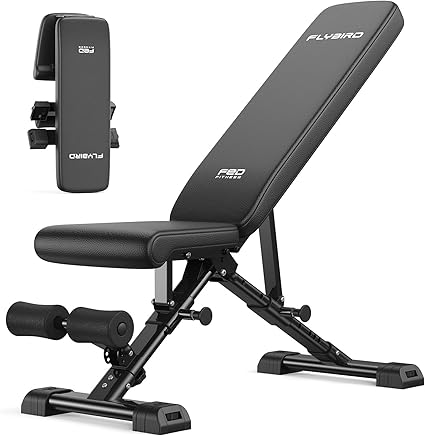
The WB5 folds flat, weighs almost nothing, and fits in a closet. For a small apartment where the “home gym” gets packed away between sessions, that matters a lot. Stability is adequate for dumbbell work and general training. Not rock-solid, but not alarming either.
Heavier lifters doing serious pressing will probably notice some flex under load, and at that point, it’s worth stepping up to the REP or Major Fitness.
For beginners or anyone working in a tight space at moderate weights, though, the WB5 does what it promises.
Major Fitness Adjustable Bench

The Major Fitness bench is heavier and bulkier than the foldable options in this category, which some people will find annoying and others will find reassuring. The wide base keeps it planted during pressing, and the weight capacity is well above what most home gym lifters will ever test.
The transport wheels are a small but useful detail. It’s not a light bench, so being able to roll it out of the way matters. If you’re training seriously and want something that won’t wobble under load, this is probably the bench to buy. If your priority is compact storage, look elsewhere.
REP AB-3100

The AB-3100 has a strong reputation in home gym circles, and it’s earned. The ladder adjustment system is fast, faster than the pop-pin systems on cheaper benches, and the padding strikes a good balance between firm and comfortable. It doesn’t shift around during heavy sets, which sounds like a low bar but isn’t always cleared by benches in this price range.
It costs more than the Flybird and Keppi options below, and that gap is noticeable in how the bench feels after six months of regular use. If you’re going to buy one bench and keep it for years, this is a reasonable place to spend slightly more.
Keppi 900LB Weight Bench

The Keppi sits between the Flybird and the REP in both price and feel. It handles flat, incline, and decline, folds down reasonably well, and the steel frame is solid enough for most training.
The padding is on the softer side compared to the AB-3100, which some people prefer, and others find less secure during pressing. Finish quality is functional rather than polished.
It’s a decent middle-ground option. Not as portable as the Flybird, not as refined as the REP, but capable enough for intermediate training without the higher price tag.
Best Budget Adjustable Dumbbells
If you can only buy one thing for a small home gym, adjustable dumbbells are probably the right call. A single pair replaces what would otherwise be a wall of fixed weights, and they work for almost every training goal, be it hypertrophy, conditioning, HIIT, or beginners learning the basics.
PowerBlock Elite EXP

The PowerBlock’s advantage is compactness. Even loaded to heavier weights, the footprint stays small, which improves handling in a way that matters during fast-paced workouts.
The selector-pin system is reliable once you’ve used it a few times. The “caged” handle design is the main thing people need to adjust to; it feels unusual at first, and a small number of lifters never warm to it. Most do.
The expandability is worth noting. You can buy the base set and add weight increments later, which makes it easier to spread the cost over time. One of the better long-term options if you plan to keep training heavier.
REP QuickDraw Adjustable Dumbbells

The QuickDraw’s main selling point is the construction: mostly metal, which puts it in a different durability category from the Bowflex and most other adjustable systems at this price.
The Lock-N-Load mechanism is fast and clicks into place with a satisfying solidity. They also handle closer to fixed dumbbells than most adjustable designs, which matters more than it sounds during pressing or rows.
The cap is 60 lbs per hand, which covers the majority of home gym users, but will frustrate anyone already training in the 70-80 lb range. If that’s not you, these are probably the smartest buy in this category.
Bowflex SelectTech 552

The 552s have been the default recommendation for adjustable dumbbells for years, and they still make sense for a lot of people. The dial system is quick, and the range — 5 to 52.5 lbs — covers most beginner and intermediate training.
The drawbacks are just as well-documented: the plastic-heavy construction means you can’t drop them, the wide profile feels awkward during certain movements like hammer curls, and after enough years of heavy use, the dial mechanism starts to wear.
They’re a good first pair of adjustable dumbbells. They’re probably not the last pair you’ll ever buy.
CAP Adjustabell

The Adjustabell is the most affordable option here, and it looks and feels like it. The twist-handle adjustment works, and the round shape handles more naturally than the rectangular Bowflex profile during pressing movements.
Construction is light compared to the REP or PowerBlock, and it shows over time. For someone just starting out who wants adjustable dumbbells without the upfront cost of a premium system, this gets the job done.
Anyone training consistently for more than a year will probably want to upgrade. But at this price, that might be a reasonable trade-off.
Best Budget Weight Plates
Plates often end up being the single most expensive part of a home gym. Steel is heavy, shipping is brutal, and the cost adds up fast. Bumper plates are popular because they reduce noise, protect flooring, and hold up better to drops.
Fringe Sport MILSPEC Bumper Plates

The MILSPEC plates land in a sensible middle position. More durable than CAP, less expensive than competition-grade bumpers.
The rubber compound keeps bounce controlled, which matters more than people expect once you’re pulling heavier deadlifts in a small space.
The steel inserts feel solid and haven’t shown the loosening issues that plague cheaper plates after extended use.
They’re not the cheapest option in this category, and if you’re just learning to deadlift and dropping 135 lbs, you probably don’t need them yet.
Once you’re training seriously and dropping weight regularly, the durability gap becomes worth paying for.
CAP 2-inch Olympic Bumper Plate Set

The CAP plates are the obvious starting point for anyone who needs bumpers and doesn’t want to spend much. They’re widely available, affordable, and hold up fine for basic strength training at moderate weights.
The rubber coating does its job. Floors stay protected, noise stays reasonable. The finish is inconsistent, and the tolerances aren’t tight, so if you care about plates sitting flush on the bar, you’ll notice.
For a beginner building a first setup and prioritizing budget above everything else, they’re a reasonable buy. Don’t expect them to last a decade of heavy use.
REP Fitness Rubber Bumper Plates

REP’s bumpers are the ones to buy if you want something that will last without paying competition plate prices. The rubber is consistent, the bounce is controlled, and the fit on the bar is noticeably cleaner than budget options like CAP.
They hold up well through regular deadlifts and drops without the cracking or hub loosening that tends to show up in cheaper plates after a year or two of real use.
Not the absolute cheapest option, but the gap in build quality is visible and tangible. A sensible long-term buy for anyone training consistently.
BalanceFrom Color Coded Bumper Plates

The main thing the BalanceFrom plates do well is make weight selection fast. The color coding is useful during conditioning workouts, where you’re repeatedly loading and unloading the bar. The steel hub is adequate for the price, and the rubber keeps noise down.
Precision and finish aren’t close to REP or Fringe Sport, and the plates show that in feel. For casual home gym users or beginners who want bumpers at a low entry cost and find the color-coding practical, these work well.
Anyone training heavily or dropping weight from overhead regularly should spend a bit more.
Best Budget Treadmills
Modern budget treadmills are foldable, quieter than older machines, and far more apartment-friendly than the hulking equipment you’d find in commercial gyms. Walking pads, in particular, have gotten very good.
NordicTrack T Series 5
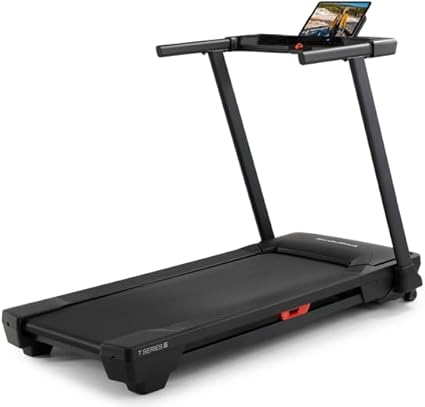
The T Series 5 is a step above the walking pads and manual options below. It’s a proper treadmill, with a cushioned deck that’s noticeably easier on the knees than running on a hard belt, actual incline settings, and iFIT compatibility if you want guided workouts.
It folds, though “folds” is relative. This is a heavier machine, and moving it takes effort. The stability that comes with that weight is real, though; it doesn’t shift or rattle during a run the way lighter treadmills tend to.
If you want a treadmill you can actually run on consistently and don’t mind the footprint, this is the right end of the budget range to be shopping.
UREVO Strol 2E

The Strol 2E is built around one practical advantage: it folds flat and fits in tight spaces without much fuss. It’s quiet enough for apartment use, which matters more than most specs when you have neighbors below you.
The 2-in-1 setup handles walking and light jogging well. It’s not a running machine. Push the pace past a jog, and it starts to feel out of its depth. But for daily movement, work-from-home step goals, or beginner cardio, it covers that ground capably.
The app connectivity works and doesn’t overcomplicate things.
Sunny Health & Fitness Manual Walking Treadmill

No motor means no motor noise, no electricity cost, and nothing mechanical to break down, which is either a feature or a limitation depending on what you need.
The manual belt requires noticeably more effort to keep moving than a motorized treadmill, which some people find awkward, and others find adds to the workout. It folds flat and stores easily.
This is the most no-frills option in this category: no app, no incline, no speed controls beyond how fast you walk. For light daily movement on a tight budget in a small space, it does that job without complication.
Yagud Walking Pad

The Yagud’s main argument is size. It slides under a desk or bed, weighs little enough to move without help, and runs quietly enough that you can take a call while using it. The remote and LED display keep things simple. There’s not much to learn or adjust.
Like all walking pads, it’s not built for running; the belt length and motor aren’t designed for that, and pushing it that way shortens the lifespan noticeably.
For someone working from home who wants to add movement during the day without dedicating floor space to a treadmill, it’s a practical and affordable option.
Best Budget Elliptical
Ellipticals are easier on the joints than running, which makes them a reasonable option for anyone in recovery, coming back from a break, or doing longer low-intensity cardio sessions.
Sunny Health & Fitness Smart Upright Elliptical

The Sunny upright elliptical is a reasonable starting point for low-impact cardio in a small space. The magnetic resistance is smooth and quiet; quiet enough for apartment use, which is the main practical concern for most people shopping in this category.
The SunnyFit app integration adds guided workouts and basic tracking without pushing the price into uncomfortable territory.
The one real limitation worth flagging: the stride length is short compared to gym-grade machines, and taller users will feel that during longer sessions. Under 5’10” or so, it’s fine. Above that, worth trying before committing.
Niceday Elliptical

The Niceday’s frame feels more substantial than the price suggests, which is the first thing most people notice when they assemble it. The magnetic drive runs smoothly and quietly through longer sessions without the grinding that shows up in cheaper friction-based machines over time.
Assembly is straightforward compared to most budget ellipticals. That’s a low bar, but clearing it matters when you’re spending an afternoon with an Allen wrench.
There’s no screen worth mentioning and no connected features, which is either a problem or irrelevant depending on whether you actually use those things.
For reliable, comfortable low-impact cardio without extras, it holds up well.
Pooboo Elliptical 399
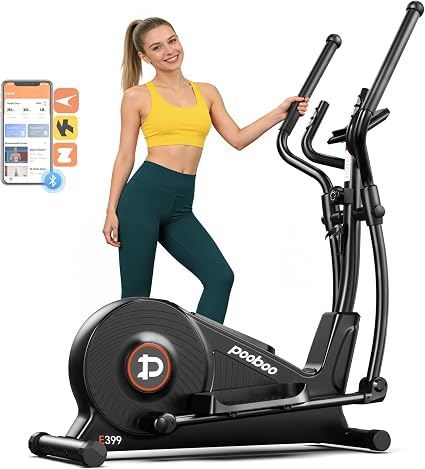
The pooboo 399 is about as basic as ellipticals get: compact, magnetic resistance, a small display showing time, distance, speed, and calories. It does low-impact cardio in a small footprint at a low price, and it does that without pretending to be something more.
The stride length is short, and the build is lightweight, so anyone training seriously or standing over 6 feet will probably find it limiting within a few months.
For casual use, weight loss work, or someone easing back into exercise after a long break, it covers the basics without asking much in return.
Best Budget Flat Bench
Not everyone needs an adjustable bench. A flat bench is cheaper, more stable, and simpler. And if your training is mostly flat pressing, it might be the smarter buy.
REP FB-3000

The FB-3000 is a flat bench that does exactly what a flat bench should do: hold still while you lift. The 11-gauge steel frame is noticeably solid, the vinyl padding grips without being sticky, and nothing flexes or shifts under load.
The four-leg design is stable but does eat up a bit of floor space around the base. If you’re used to a single-post bench and rely on a wide foot position for leg drive, that’s worth knowing before you buy. For most lifters, it’s a non-issue. Simple, well-built, and priced fairly for what you get.
Titan Fitness Elite Series Single Post Flat Bench
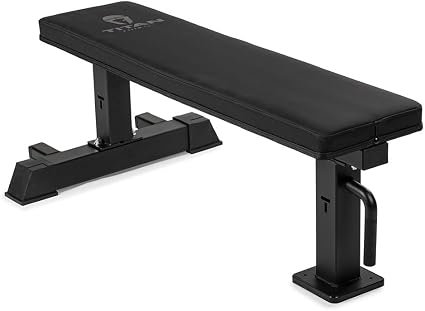
The single-post design is the whole point here. It frees up foot placement in a way that four-leg benches don’t, which matters more as your bench press gets heavier and leg drive becomes part of the movement. The pad is thick, and the frame is heavy.
This doesn’t feel like a budget bench once it’s set up. It’s also not going anywhere easily, which makes it less practical for smaller spaces where you’d want to move equipment around between sessions.
For a dedicated pressing setup in a garage gym where it can live in one spot, it’s a strong buy.
Best Budget Kettlebells
Kettlebells don’t get replaced the way machines and benches do. A good cast-iron kettlebell will outlast almost anything else in your gym, which makes quality worth paying for.
REP Fitness Kettlebells

REP’s kettlebells are cast iron, well-balanced, and built without anything unnecessary. No coating that chips, no handle that’s too thick or too thin, no wobble in the flat base.
The textured handle holds up through sweaty swings and high-rep conditioning work without becoming slippery. Handle diameter is in a comfortable middle range, which means two-handed movements like swings and goblet squats feel natural rather than forced.
There’s nothing exciting to say about them, which is more or less the point. Buy the weight you need, use them for years, never think about them again.
Bowflex SelectTech 840 Adjustable Kettlebell

The 840 makes sense in one specific situation: you want kettlebells, you don’t have space for multiple fixed bells, and you’re not doing highly technical movements where the shape of the bell matters.
For swings, goblet squats, presses, and carries, the dial-adjust system works quickly, and the handle is comfortable.
The trade-off is size. The 840 is bulkier than a fixed kettlebell at equivalent weights, and that becomes noticeable during cleans or snatches, where the bell needs to move around your hand cleanly.
For general conditioning in a small space, it’s a practical choice. For serious kettlebell training, fixed bells are worth the extra floor space.
Best Budget Fixed Dumbbells
Fixed dumbbells are faster to use than adjustable systems and generally hold up better over time. If you train with heavier weights or want quick transitions between exercises, a set of fixed pairs can make a real difference.
Amazon Basics Rubber Hex Dumbbell

The rubber coating is the meaningful difference between these and the CAP cast iron option above. Quieter on hard floors, less likely to damage surfaces, and easier to grab without the cold-metal feel during winter garage sessions. The chrome handle is comfortable and provides adequate grip for general training.
Build quality is what you’d expect at this price: functional and consistent, not refined. For beginners or anyone furnishing a home gym on a tight budget who wants weights that won’t mark up the floor, they do the job without asking you to think too hard about them.
Fitvids Rubber Encased Hex Dumbbell Set

The main practical advantage of buying a set with a rack is that the organization problem gets solved upfront. Loose dumbbells in pairs tend to end up scattered; a rack keeps them in one place and makes the space look less chaotic.
The rubber coating handles noise and floor protection adequately, and the handles are comfortable through normal pressing, rowing, and curl work. Finish quality is mid-range. Better than bare cast iron, not as clean as commercial-grade rubber dumbbells.
For a beginner putting together a complete home setup in one purchase without a large budget, the set format makes practical sense.
Best Budget Cardio Equipment
A jump rope is genuinely good cardio. It’s cheap, takes up no space, goes anywhere, and is harder than it looks once you push the pace.
WOD Nation Attack Speed Jump Rope

The Attack Speed rope does what a speed rope needs to do: spin fast, stay light, and not tangle constantly. The cable is quick enough for double unders once you’ve put in the practice, and the adjustable length makes sizing straightforward.
The handles aren’t bulky, which matters during longer conditioning sets where grip fatigue adds up. Multiple cable options are included, which is a nice touch at this price. You get a backup and can experiment with different weights.
For anyone learning double unders or adding jump rope to HIIT work, this is a reasonable first rope that won’t hold you back while you’re developing the skill.
Crossrope Get Lean Set – Weighted Jump Rope

The Crossrope system is built around the weighted ropes, and that’s what makes it different from every other jump rope on this list.
The added weight forces more engagement from the arms, shoulders, and core, which turns what’s usually a leg-dominant cardio exercise into something more demanding across the whole body.
The quick-clip system makes swapping between rope weights fast. Faster than it sounds, which matters mid-workout. The handles are high quality, and the rotation is smooth at any pace.
It costs noticeably more than the other options here, and that’s a real consideration. If you’re committed to jump rope training as a regular practice rather than an occasional add-on, the durability and workout variety justify the price difference.
Epitomie Fitness Sonic Boom M2 High Speed Jump Rope

The Sonic Boom M2 is built specifically for speed. The ball-bearing system spins faster than most ropes at this price, and the handles stay balanced and controlled even during long sets.
The screw-free adjustment is more convenient than the traditional crimp-and-cut method, and it holds position reliably.
This isn’t a beginner rope; the speed that makes it good for double unders and advanced CrossFit work also makes it unforgiving for someone still learning timing and rhythm.
For intermediate to advanced users who want a fast, responsive rope without paying competition-level prices, it performs well above its price point.
Best Budget Exercise Bike
Exercise bikes are quieter than treadmills, easier on the joints, and work equally well for short, intense sessions or longer, steady-state rides. For apartment training in particular, they’re hard to beat.
Sunny Health & Fitness SF-B1879

The SF-B1879 runs on a belt-drive magnetic resistance system, which means two things practically: it’s quiet enough for apartment use, and there are no friction pads to wear out and replace over time.
The frame is stable during hard efforts. It doesn’t rock or creak when you push the pace, which is a more common problem on budget bikes than manufacturers like to admit. The seat and handlebars adjust across a reasonable range, covering most body types without much fuss.
The display and onboard features are basic, which is fine if you’re riding to your own music or a third-party app. If you need a connected screen with live classes, look at the Schwinn IC4 instead.
YOSUDA Friction 1.0

The YOSUDA uses friction resistance rather than magnetic, which gives it a ride feel closer to a traditional spin bike. More physical contact between the pad and flywheel, more heat generated, and a resistance curve that some riders find more natural during standing climbs.
The trade-off is noise and maintenance; friction pads wear down over time and need replacing, and the resistance mechanism is louder than a magnetic system. The heavy flywheel keeps momentum smooth between pedal strokes, which helps during longer endurance rides.
For someone who wants a straightforward budget bike and doesn’t mind occasional upkeep, it’s a solid choice. For apartment dwellers with noise concerns, the SF-B1879 above is the better fit.
pooboo Folding Exercise Bike

The folding frame is the whole point here, and it works. The bike folds down quickly and takes up minimal floor space when stored. It’s light enough to move without help, which makes it practical for anyone who needs the space back between sessions.
Resistance is sufficient for light cardio and recovery rides; this isn’t a bike you’re going to do hard interval training on, and the frame isn’t built to handle that kind of sustained intensity anyway. The seat is acceptable for 20-30 minute sessions before comfort becomes an issue.
For casual use, rehabilitation work, or simply adding low-intensity movement to the day in a small apartment, it serves that purpose well.
Best Budget Barbell
A barbell is the backbone of serious strength training: squats, deadlifts, presses, rows. A quality bar, bought once, handles all of it for years.
Synergee Games 15kg and 20kg Colored Ceramic Coated Barbells

The Synergee Games bars punch above their price in a few meaningful ways. The ceramic coating handles corrosion better than bare steel or basic chrome, which matters in a garage gym where temperature and humidity fluctuate.
The 190,000 PSI tensile strength and 1,500 lb rating are well beyond what most home gym lifters will ever test, and the needle bearings give the sleeves a smooth spin that makes a real difference during cleans and snatches.
There’s moderate whip, which is appropriate for a bar trying to handle both strength work and Olympic movements without being optimized for either.
For a home gym bar that does everything reasonably well and holds up long-term, the price-to-performance ratio is genuinely strong.
CAP Barbell 2-Inch Olympic 7ft Nar

The CAP Olympic bar is a beginner bar, and it’s priced like one. Chrome finish, medium knurling, adequate construction for squats, presses, rows, and deadlifts at moderate weights. It won’t feel like a Rogue or a Synergee under the bar, and the sleeves spin with more friction than you’d want for Olympic lifting.
For someone learning the basic barbell movements and not yet moving heavy weights, none of that matters. It holds plates, it doesn’t bend, and it costs less than most alternatives. Once you’re pulling or squatting serious weight consistently, you’ll want to upgrade. As a starting point, it does the job.
Sunny Health & Fitness 60-Inch Chrome Barbell Bar

The shorter length is the defining characteristic here. At 60 inches versus the standard 84, it fits in tighter spaces and is easier to manage in a small room. That makes it useful for curl bars, lighter pressing work, and accessory movements where a full-length bar feels unwieldy.
The lighter-duty construction and shorter sleeves mean it’s not built for heavy compound lifting, and using it for max-effort squats or deadlifts is pushing it beyond its design intent.
For a compact home setup focused on lighter training, or as a dedicated accessory bar alongside a full-length Olympic bar, it fills that specific role well.
How We Chose the Equipment
Budget fitness gear ranges from genuinely solid to embarrassingly bad, and the price tag doesn’t always tell you which you’re getting.
Some racks wobble badly under real weight. Some benches feel unstable from the moment you sit on them. Some adjustable dumbbells start shedding parts within a few months.
We prioritized durability over sticker price; gear with strong materials and a track record of lasting. We also weighted versatility heavily, since a piece of equipment that handles ten exercises is worth far more than one that handles two.
Space efficiency mattered too; most people don’t have unlimited floor space, and foldable or compact gear makes a real difference in day-to-day usability.
Finally, we looked for equipment that can grow with you rather than forcing a full replacement when your training evolves.
Sample Home Gym Setups By Budget
Under $500
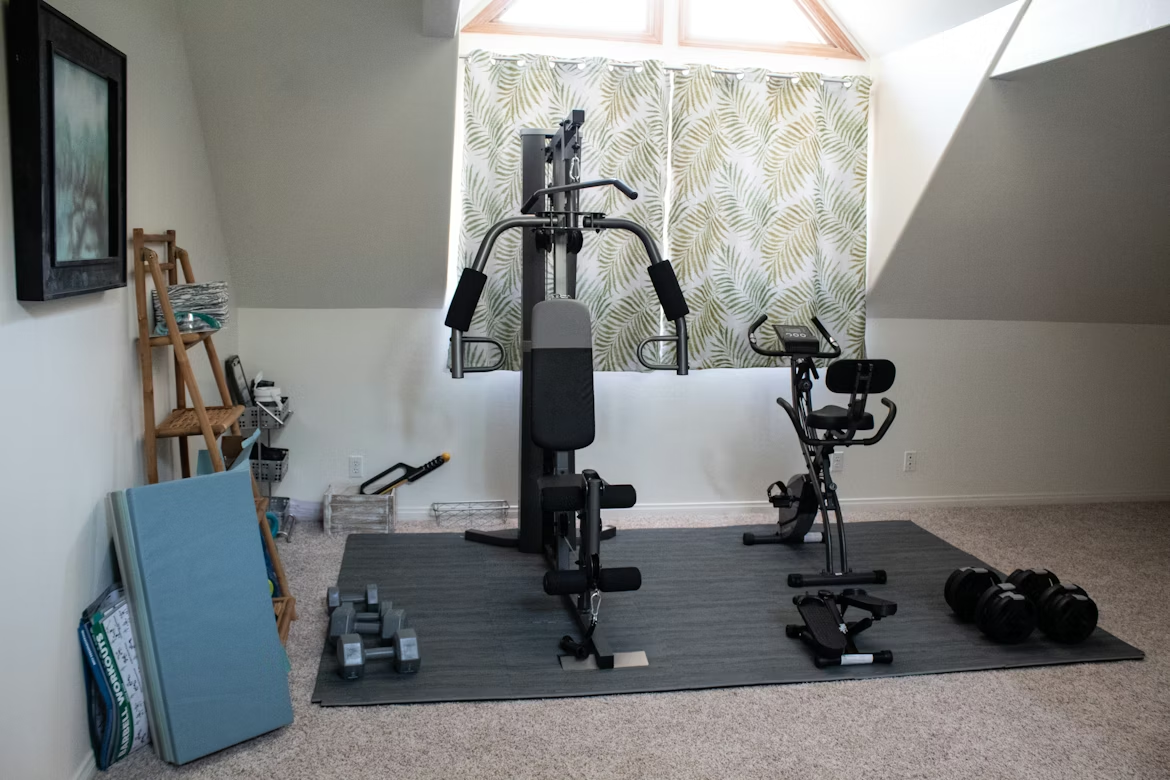
This gets you a functional training setup. Not a full gym, but enough to make real progress:
- Bowflex SelectTech 552
- FLYBIRD WB5 Weight Bench
- Fit Simplify Resistance Bands
- Iron Gym Express Home Pull Up Bar
Works well for beginners, apartment spaces, and fat loss training. The adjustable dumbbells do most of the heavy lifting here (literally and figuratively).
Under $1,000
At this budget, you can build a proper strength setup:
- REP PR-1100
- Major Fitness Adjustable Bench
- CAP Barbell 2-Inch Olympic 7 ft Barbell
- Fringe Sport MILSPEC Bumper Plates
This handles progressive overload, barbell work, and long-term strength training. A reasonable garage gym starting point.
Apartment vs. Garage Gyms
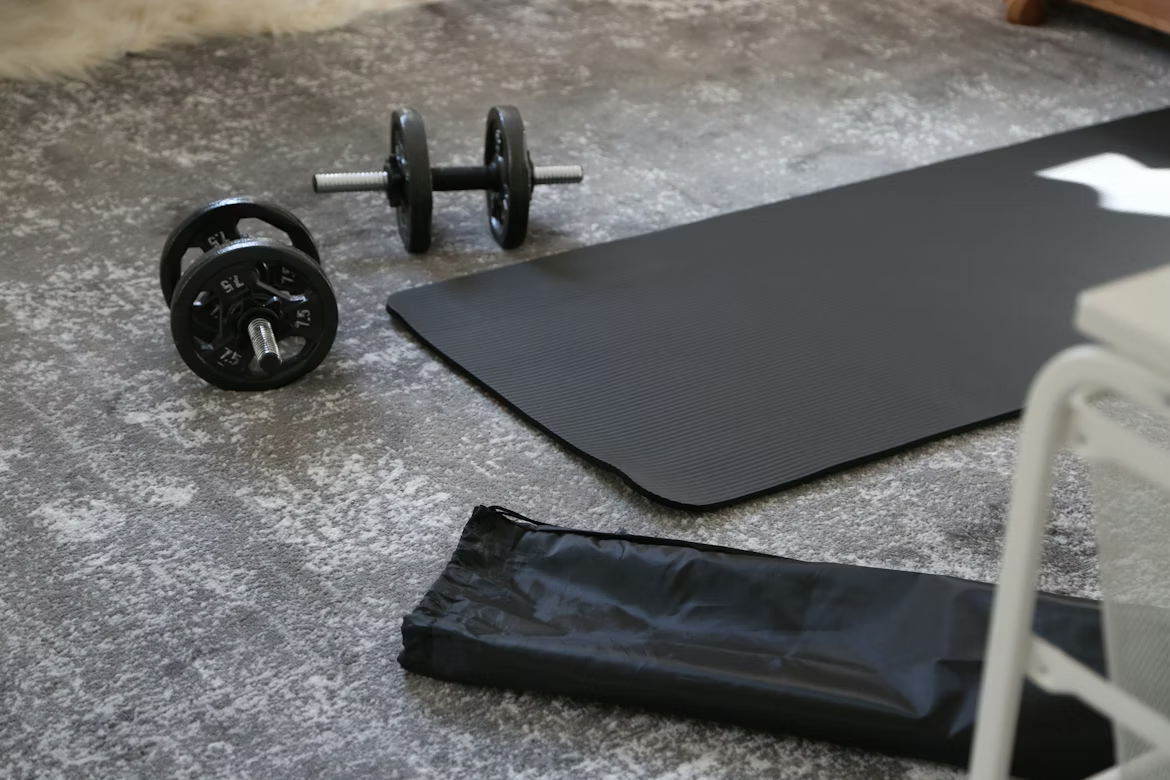
Apartments impose real constraints: noise, space, neighbors. The smart approach here is adjustable dumbbells, a foldable bench, resistance bands, a walking pad for cardio, and a pull-up bar. Walking pads have become genuinely good for under-desk use or low-impact conditioning without the noise of a treadmill.
Garages give you room to grow. A rack, barbell, and plates make more sense when you have the ceiling height and floor space. The nice thing about garage gyms is that they can evolve. You can add a cable machine, a rowing machine, or better storage over time without tearing everything down.
Frequently Asked Questions
What should I buy first?
Adjustable dumbbells, unless you’re committed to barbell training from the start. They replace a lot of equipment in a small footprint.
Do I need a power rack?
Eventually, if you’re doing serious strength training. It’s not the first purchase, but it becomes important as the weights get heavier.
Are adjustable dumbbells worth it?
Generally yes. They save space and reduce clutter significantly. The dial-adjust systems (Bowflex) are more fragile long-term; pin-and-sleeve or lock-and-load systems tend to hold up better.
What’s the highest-value combination?
Adjustable dumbbells, a bench, a rack, and resistance bands. Those four pieces cover more exercises than most people will ever need.
Final Thoughts
A home gym isn’t about having the most equipment. It’s about having the right equipment, placed where you’ll actually use it, bought at a price that doesn’t require justifying to your partner for six months.
Start with what you’ll actually use. Expand slowly. Spend more where it matters, on racks and benches that take real weight, and less where it doesn’t.