A good stand mixer does far more than whip cream or mix cake batter. For serious home bakers, it becomes the heart of the kitchen especially when working with bread dough, pizza bases, bagels, or sourdough starters.
Modern stand mixers are now designed with stronger gear systems, better cooling, and smarter speed control to handle dense dough without overheating or shaking across the counter.
Some focus on versatility for everyday cooking, while others are built specifically for long kneading sessions and high-hydration doughs.
Below are some of the best stand mixers currently worth considering for bread baking, artisan dough, and all-around kitchen use.
Contents
Best Stand Mixers Reviews
1. KitchenAid Classic Series K45SS
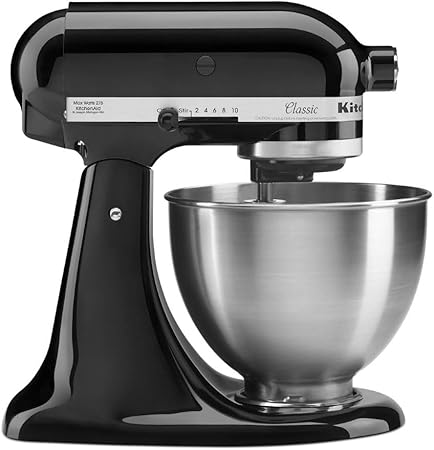
The KitchenAid Classic continues to dominate home kitchens because it balances simplicity, durability, and versatility better than almost any other mixer in its class. It handles cookies, cake batter, whipped cream, pizza dough, and standard bread recipes without demanding a huge learning curve.
What really makes it stand out is the massive attachment ecosystem. From pasta rollers to meat grinders, this mixer can evolve into a complete prep station over time.
Mixer Style: Tilt-head stand mixer
Capacity: 4.5-quart stainless steel bowl
Motor: 275W motor with 10 speed settings
Included Tools: Dough hook, flat beater, wire whisk
Why Bakers Like It
- Easy for beginners to operate
- Compact enough for smaller kitchens
- Strong metal construction with long-term reliability
- Huge range of optional attachments available
Best For: Home bakers who want one machine for everyday cooking, baking, and occasional bread making.
Final Take: If you want a dependable all-purpose mixer that fits nearly every kitchen, the KitchenAid Classic remains one of the safest and smartest choices available.
2. Ooni Halo Pro Spiral Mixer

The Ooni Halo Pro brings professional spiral-mixing technology into home kitchens. Unlike planetary mixers, the bowl rotates while the spiral hook stays fixed, helping develop gluten more efficiently with less friction and heat buildup.
That makes a noticeable difference for sourdough, Neapolitan pizza dough, and high-hydration artisan recipes where dough temperature matters.
Mixer Style: Spiral mixer with rotating bowl
Capacity: 7.3 quarts
Speed Control: 58 adjustable speed levels
Special Features: LED bowl lighting, digital timer, removable breaker bar
Why Bakers Like It
- Excellent gluten development
- Extremely precise speed adjustments
- Very quiet during operation
- Ideal for pizza and sourdough enthusiasts
Downsides
- Heavy and takes up significant counter space
- More specialized than general-purpose mixers
- Premium pricing compared to standard stand mixers
Best For
Dedicated pizza makers and serious sourdough bakers.
Final Take
If dough quality matters more to you than versatility, the Ooni Halo Pro delivers bakery-style mixing performance at home.
3. Bosch Universal Plus Stand Mixer

The Bosch Universal Plus is a favorite among serious bread bakers because of its incredible stability and dough-handling power. Its bottom-drive design keeps the mixer balanced even under heavy loads, allowing it to process multiple loaves at once without struggling.
This mixer is especially popular with bakers making whole-grain breads, bagels, or family-sized batches.
Mixer Style: Bottom-drive mixer
Capacity: 6.5 quarts
Motor: High-torque 500W motor
Speed Options: 4 speeds plus pulse mode
Why Bakers Like It
- Handles large quantities of dough easily
- Excellent stability during kneading
- Runs cooler during long mixing sessions
- Great for dense whole-wheat doughs
Downsides
- Industrial-looking design may not suit every kitchen
- Center-column bowl design takes adjustment
- Less open access while adding ingredients
Best For
Frequent bread bakers and high-volume dough preparation.
Final Take
For people who bake bread multiple times a week, the Bosch Universal Plus is one of the most capable dough-focused mixers available.
4. ZACME 8.4QT Commercial Stand Mixer

The ZACME 8.4QT mixer is built for users who regularly make huge batches of dough. With its large stainless-steel bowl and powerful DC motor, it feels closer to commercial kitchen equipment than a standard home mixer.
Despite the high capacity, it also keeps noise surprisingly low compared to many heavy-duty models.
Mixer Style: Bowl-lift commercial mixer
Capacity: 8.4 quarts
Motor: 800W DC motor
Construction: Aluminum die-cast body with metal gears
Why Bakers Like It
- Huge bowl capacity for batch baking
- Powerful enough for dense doughs
- Quiet operation for its size
- Durable metal gear system
Downsides
- Large footprint requires more counter space
- Overkill for occasional bakers
- Heavy to move around frequently
Best For
Large households, batch bakers, and small home baking businesses.
Final Take
If you regularly bake in large quantities, the ZACME offers commercial-style performance without commercial-level pricing.
5. Cuisinart SM-50R Stand Mixer

The Cuisinart SM-50R offers impressive value for newer bakers who want reliable dough mixing without spending premium money. It provides a larger bowl and stronger motor than many entry-level mixers while staying relatively affordable.
It works well for sandwich bread, pizza dough, cookies, and regular family baking tasks.
Mixer Style: Tilt-head mixer
Capacity: 5.5 quarts
Motor: 500W motor
Speed Settings: 12 speeds
Why Bakers Like It
- Affordable price for the performance
- Good bowl capacity for family recipes
- Easy controls and smooth operation
- Metal construction feels sturdier than many budget mixers
Downsides
- Can vibrate slightly with heavier dough
- Internal components may wear faster under daily heavy use
- Not ideal for extremely dense bread recipes
Best For
Budget-conscious home bakers who still want solid performance.
Final Take
The Cuisinart SM-50R is one of the strongest entry-level options for anyone getting into bread baking without overspending.
Quick Comparison Overview
| Mixer | Bowl Size | Best For | Strength |
|---|---|---|---|
| KitchenAid Classic | 4.5 Qt | Everyday baking | Versatility |
| Ooni Halo Pro | 7.3 Qt | Pizza & sourdough | Professional dough mixing |
| Bosch Universal Plus | 6.5 Qt | Large bread batches | Stability & power |
| ZACME 8.4QT | 8.4 Qt | Heavy-duty baking | Capacity |
| Cuisinart SM-50R | 5.5 Qt | Budget buyers | Value |
What to Look for in a Bread Dough Mixer
Motor Quality Matters More Than Wattage
Higher wattage alone doesn’t always mean better kneading. A well-designed motor with strong low-speed torque performs far better for bread dough than raw power numbers alone.
Spiral vs Planetary Mixing
Planetary Mixing
The attachment rotates around the bowl. This style is more versatile for general baking and everyday kitchen tasks.
Spiral Mixing
The bowl rotates while the hook stays stationary. This method develops gluten more gently and efficiently, making it ideal for artisan bread and pizza dough.
Stability During Kneading
Heavy dough can make lightweight mixers wobble or “walk” across the counter. Metal frames, rubber feet, and heavier construction improve stability significantly.
Bowl Capacity
If you regularly bake multiple loaves or large pizza batches, a 6-quart or larger bowl makes a noticeable difference.
Frequently Asked Questions
Can stand mixers really handle bread dough?
Yes. Most quality stand mixers can manage bread dough, but stronger models with better torque perform much better for dense or high-hydration recipes.
Is a bowl-lift mixer better for bread?
Usually yes. Bowl-lift mixers tend to offer greater structural stability during heavy kneading sessions.
How long should dough be kneaded in a mixer?
Most bread dough recipes need around 5–8 minutes on low speed. Higher speeds can overwork the dough and strain the mixer.
Are expensive stand mixers worth it?
If you bake regularly, higher-end mixers often last much longer and handle dough more efficiently than cheaper models.