A great blender used to mean one thing: decent smoothies. Not anymore.
Today’s machines can pulverize frozen fruit, turn almonds into silky nut butter, heat soup through friction alone, and survive years of daily punishment without smelling like burnt rubber after six months.
Premium brands like Vitamix and Blendtec have also pushed the “buy it for life” trend, while Ninja and Breville now offer serious performance at significantly lower prices.
Contents
But What Blender Should I Buy?
The problem is that many blenders still look better on paper than they actually perform. Weak motors stall on frozen fruit. Cheap seals start leaking. Some leave kale chunks in smoothies, no matter how long you run them.
After comparing performance, noise, cleaning, and long-term reliability, here are five worth buying.
1. Vitamix 5200
Best overall

The 5200 has dominated “best blender” lists for years, and it keeps earning the spot. Newer smart models have arrived, but this machine still produces some of the smoothest results you can get for home use.
What separates it from cheaper blenders isn’t raw speed; it’s consistency.
Smoothies come out genuinely creamy, not slightly grainy. Frozen fruit blends without leaving ice chunks. Peanut butter becomes silky rather than clumpy.
That might sound like marketing, but after using budget blenders that technically work, the difference is obvious.
The 2-horsepower motor powers through frozen mango, oats, seeds, and dense protein shakes without bogging down.
The tall, narrow container also helps with circulation during thick blends, which matters more than most buyers expect until they’re manually stirring chunks back toward the blades.
One underrated feature: extended blending generates enough friction heat to warm soups directly in the pitcher. It takes a while, but it works.
2. Vitamix Ascent X4
Best premium

The Ascent X4 is what happens when Vitamix tries to modernize. It keeps the blending power people rely on and adds wireless jar detection, smart presets, and cleaner controls. Unlike a lot of “smart” appliances that feel complicated without being useful, the X4 mostly justifies the added tech.
Blending performance is excellent. Smoothies come out smooth quickly, frozen ingredients disappear fast, and nut butters stay creamy. The preset programs actually help in practice. Soup mode in particular works well for hands-off cooking.
Noise is slightly better than older Vitamix models, though calling it “quiet” would be generous. Build quality is solid throughout: responsive controls, a sturdy jar, stable on the counter, even during thick blending sessions.
The main issue is price. This is firmly in luxury appliance territory, and some of the smart features will feel unnecessary if you mostly make the same three things every morning. If you prefer simple manual control over touchscreens, the classic 5200 at a lower price might be the better call.
But if you want a premium blender you won’t need to replace, the Ascent X4 is hard to argue with.
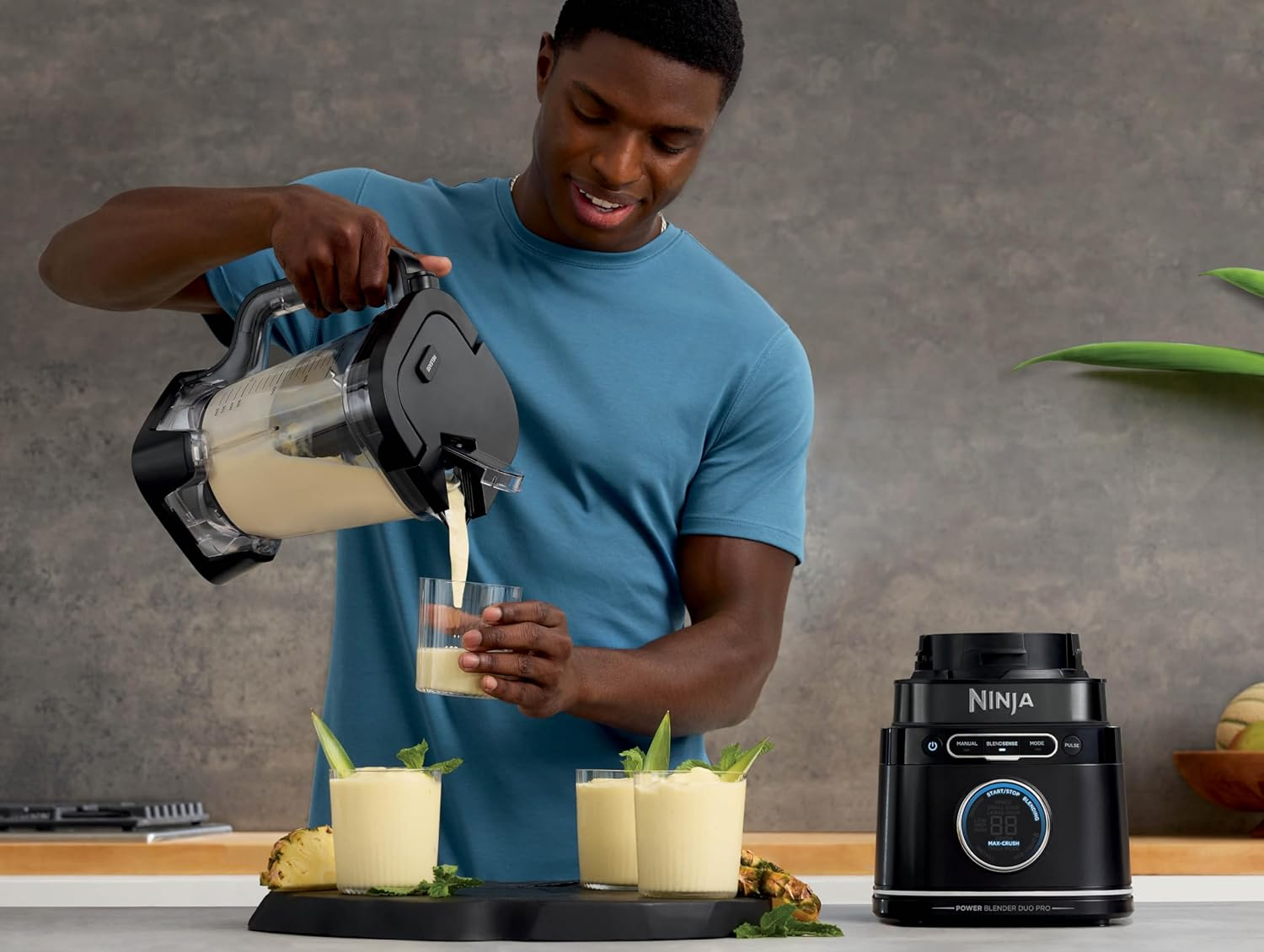
3. Ninja Detect Duo Power Blender Pro
Best value

Ninja has become popular for a simple reason: it delivers real performance without Vitamix pricing. The Detect Duo is particularly interesting for buyers upgrading from cheap blenders who aren’t ready to spend $500+.
Ice crushing is solid. Frozen fruit blends quickly. Protein shakes and smoothies come out smooth enough that most people won’t feel like they’re compromising.
The included personal blender cups are quite convenient for single-serving use. You’re not hauling out a 72-oz pitcher every morning.
The automatic blending programs help if you’re new to high-powered blenders. The machine adjusts speed and timing based on ingredient thickness rather than running at one speed until you stop it.
That said, it does get noisy under load, and thick nut butter blends sometimes require stopping to stir manually.
Long-term durability after years of daily heavy use probably won’t match that of Vitamix. That 1-year warranty versus 7-10 years elsewhere tells part of the story. The plastic components also feel noticeably less substantial.
For most households, though, this is the right call. You get strong performance, useful features, and a price that’s actually reasonable.
4. Breville Super Q
Best for apartments

Most powerful blenders sound like a jet engine with a loose panel. The Breville Super Q is one of the few that doesn’t.
It’s still audible (no blender genuinely blends silently), but the noise reduction here is real. Side-by-side with a Vitamix 5200, the difference is noticeable enough to matter if you blend at early hours or share walls with neighbors.
Performance is strong. The 1800-watt motor handles frozen fruit, ice, soups, and nut butters without fuss. Smoothie texture with leafy greens is excellent, which is often where cheaper machines reveal themselves. You end up with fine green grit that keeps reminding you it’s there.
The self-cleaning cycle works well: warm water, soap, run for a minute, rinse. Presets are polished and don’t require digging through a manual to figure out.
The downsides are real, though. This thing is large and heavy, which becomes annoying fast in a small kitchen. And it’s expensive, close to Vitamix territory, which means you’re paying a premium specifically for the quieter operation.
That’s a reasonable trade if noise is your actual problem. If it isn’t, the 5200 or the Ninja is probably a better value.
5. Blendtec Classic 575
Best for frozen drinks

Blendtec’s reputation comes from raw power, and the Classic 575 delivers that in a specific way: it is extraordinarily good at frozen things. Frozen margaritas, smoothie bowls, icy protein drinks: this is where the machine earns its price.
Instead of sharp multi-edge blades, Blendtec uses thick, blunt blades spinning at very high speed. It sounds like a design compromise, but it works: the durability is good, and the blending results hold up, especially for ice-heavy recipes.
Cleaning is also easier than most blenders. Fewer crevices, no complex blade assembly underneath. The self-clean cycle takes under a minute.
The tradeoffs: the wide jar design sometimes struggles with smaller batches, since ingredients tend to cling to the sides rather than circulating the way they would in a narrower Vitamix container. It’s also loud. And for general daily blending (smoothies, nut butters, soups), the Vitamix models perform more consistently.
If frozen drinks and ice crushing dominate your blender use, this is the one to buy. If they’re just occasional, something else will probably serve you better across the board.
How to Choose a Blender to Buy
Motor power matters more than wattage numbers.
A cheap blender may advertise high wattage while still stalling on frozen fruit or overheating during longer runs. A motor that can actually sustain power through dense mixtures is different from one that peaks briefly and slows down. The burnt motor smell after a few months of heavy use is one of the most common complaints about budget models.
Noise is a bigger deal than most buyers expect.
If you blend early mornings in an apartment, the difference between a standard high-powered blender and a quieter model becomes something you feel every day. The Breville Super Q is the only option here that genuinely addresses this.
Durability usually scales with price.
Premium blenders often last 7-15 years with normal maintenance. Replacing three failed budget blenders over the same period often costs more than buying one good one upfront, and it’s also more aggravating.
Personal blender cups are useful if you’re making single servings daily.
Full-size pitchers are better for families, soups, and anything requiring more than 16 oz. The Ninja includes both, which is part of why it’s a strong value option.
Cleaning convenience matters.
Self-cleaning modes sound like a small thing. They don’t feel small after daily use.
Real-World Test Results
Smoothie texture (best to worst): Vitamix 5200 → Vitamix Ascent X4 → Breville Super Q → Ninja. The Ninja occasionally left slight graininess with leafy greens.
Ice crushing: Blendtec Classic 575 → Ninja → Vitamix 5200.
Noise (quietest first): Breville Super Q → Vitamix Ascent X4 → Ninja. The Blendtec and Vitamix 5200 are loud under heavy load.
Nut butter: The Vitamix models consistently produced the smoothest results with the least manual intervention. This is where motor strength and container circulation matter most.
Final Verdict
- Vitamix 5200: You want the most proven, durable blender, and noise isn’t your main concern.
- Vitamix Ascent X4: You want smart presets alongside elite blending performance and don’t mind the price.
- Ninja Detect Duo Power Blender Pro: You want the best performance-per-dollar for everyday household use.
- Breville Super Q: Noise reduction is your top priority.
- Blendtec Classic 575: You make frozen drinks often and want the best machine for that job.
Common Questions
Are expensive blenders worth it?
For heavy daily use, usually yes. Better motor, smoother results, longer life, stronger warranty. The math often works out in favor of buying once.
Which is best for smoothies?
Vitamix models and the Breville Super Q perform best with leafy greens and frozen fruit. The Ninja is close and costs less.
Can blenders make hot soup?
High-speed blenders can heat soup through blade friction during extended blending. It takes a few minutes, but it works without a separate heating element.
How long do premium blenders last?
Vitamix and Blendtec models regularly last 10–15 years with normal use. That warranty difference, 7-10 years versus 1 year on the Ninja, reflects that gap honestly.
What size jar do I need?
48-64 oz handles most household use. Personal cups are convenient for single servings. Larger jars help for batch cooking or families, but they’re awkward to clean and store daily.